

In June 1990 I told Louis Rukeyser on Wall Street Week that the Japanese bull market was over, and the Nikkei didn’t see its 1989 high again until 2024.
The reason was simple:
Japanese stocks were still trading at 50 times earnings while their long bonds paid around 7%. A stock at 50 times earnings gives you a 2% earnings yield, and 2% can’t compete with a 7% government bond.
In the same interview I warned that any company with a leveraged balance sheet in a cyclical industry could get into trouble, and I singled out the airlines. The recession started the following month, and within 7 months Continental and Pan Am had both filed for bankruptcy.
I still run those same 2 tests on every stock today, comparing what the business earns me against what a bond pays me and checking how much debt is holding it up. With long-term rates pushing higher, a lot of the AI darlings are priced on stories and financed with borrowed money, and the crowd is still convinced this time is “different.”
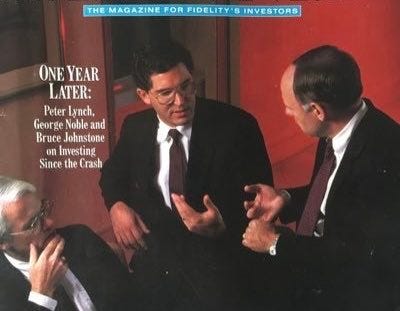
I learned my trade under Peter Lynch at Fidelity and ran the #1 mutual fund in the country in 1985, my first year managing money. I went on to found 2 hedge funds that each grew past $1 billion, and decades later the method hasn't changed:
Our longs are up 24.4% on average and our shorts are down 36.5%, a 60.9% spread that works out to 133% annualized, and 21 of our 24 scored calls are winners.
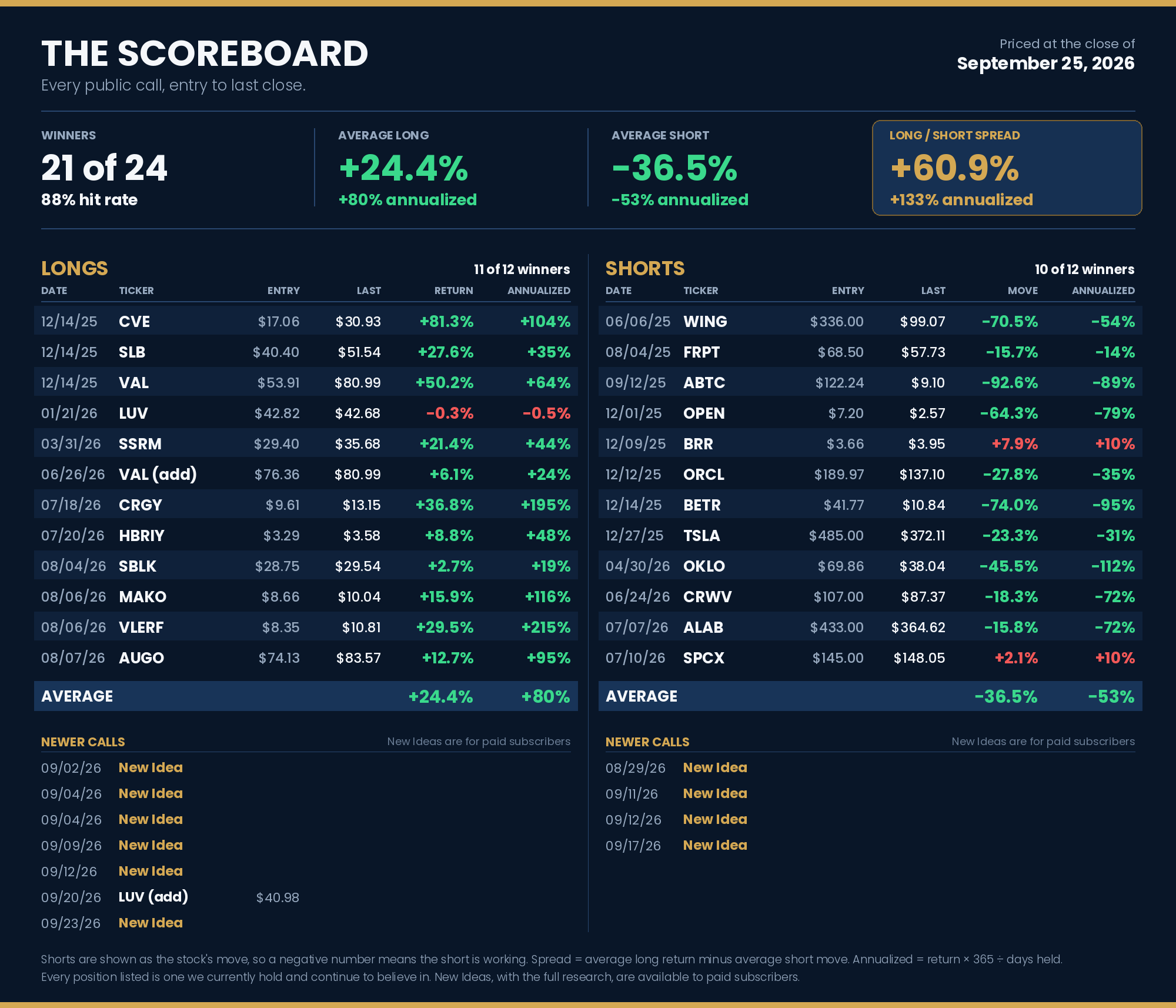
Stock prices follow earnings, and right now that test points us long energy and the gold miners and short the consumer names, tech and anything sensitive to interest rates. Dispersion is increasing, so the gap between the right stocks and the wrong ones keeps getting wider.
On October 1, the annual goes from $450 to $599 and the Founding Membership (with free access to 6 conferences per year) goes from $950 to $1,200, with the monthly moving to $99. Subscribe before then and lock in today’s price for as long as you stay subscribed:
And remember: WE ARE IN A MARKET OF STOCKS.


